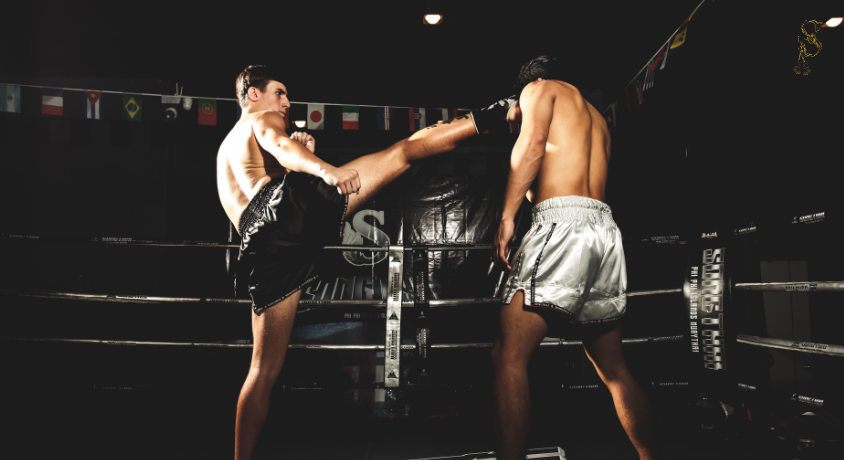
When it comes to the world of elite striking arts, two names consistently dominate the conversation: Muay Thai and kickboxing. For combat sports enthusiasts, fitness seekers, and aspiring martial artists, these two disciplines are widely recognized as the most effective stand-up fighting systems on the planet. To the untrained eye, they might look incredibly similar. After all, both take place in a squared boxing ring, both involve athletes wearing boxing gloves, and both utilize powerful punches and devastating kicks to dismantle opponents.
However, when you dig deeper into the muay thai vs kickboxing debate, you will quickly discover that they are fundamentally different. They differ vastly in their rule sets, the weapons allowed, the foundational stances, defensive strategies, and their cultural histories.
If you are trying to decide which martial art to practice, or if you simply want to understand what is happening when you watch a professional fight, understanding these nuances is crucial. In this comprehensive guide, we will break down Muay Thai and kickboxing rules, explore the weapons and techniques of each art, and answer the highly debated question: Kickboxing vs Muay Thai which is better? Finally, we will explain why practitioners of other striking arts often seek out traditional Muay Thai instruction, and how you can experience authentic training at SONGTHAI on Phi Phi Island.
To truly appreciate the differences between kickboxing and muay Thai, you must first understand their historical and cultural roots. The way these sports evolved heavily influences how they are practiced today.
Muay Thai is the national sport and cultural martial art of Thailand, boasting a history that dates back hundreds of years. It was originally developed as a highly practical, close-combat system for battlefield survival when soldiers lost their weapons. Because of this, it is famously known as the “Art of Eight Limbs.” Practitioners utilize their entire body as a weapon, engaging two fists, two elbows, two knees, and two shins.
Beyond the physical techniques, Muay Thai is deeply rooted in Thai tradition and spirituality. Before every traditional fight, fighters perform the Wai Kru Ram Muay, a ceremonial dance that pays respect to their teachers, parents, and ancestors. The fights themselves are historically accompanied by live Sarama music, which dictates the pace and rhythm of the battle.
Unlike Muay Thai, which grew organically from one nation’s history, kickboxing is an umbrella term for a combat sport that evolved through the blending of different martial arts in the mid-20th century.
In the 1950s and 1960s, Japanese karate practitioners sought a way to test their skills in a full-contact format, eventually crossing paths with Thai fighters. This led to the creation of Japanese kickboxing. Later, in the 1970s, American kickboxing emerged by combining full-contact Karate with Western Boxing. Finally, the famous “Dutch Kickboxing” style was born, which heavily integrated elite Western boxing combinations with devastating Kyokushin Karate low kicks and Muay Thai influences. Kickboxing is purely a modern combat sport without the ancient spiritual ceremonies tied to it.
If you want to know how these two sports contrast inside the ring, you have to look directly at Muay Thai and kickboxing rules. The rules dictate the tools a fighter can use, which in turn dictates their entire fighting style.
This is the most definitive difference between the two striking arts.
The way close-quarters combat is handled is entirely different.
Because the rules differ, the optimal way to stand and move differs drastically as well.
It is the ultimate debate in martial arts gyms across the globe: Kickboxing vs Muay Thai which is better?
The honest answer is that neither is objectively “better” in a vacuum; it depends entirely on the rules of engagement, your personal goals, and the context of the fight.
Where Kickboxing Excels: If you prefer high-volume striking, intricate boxing combinations, and rapid mobility, kickboxing is superior. A pure kickboxer will often out-box a traditional Muay Thai fighter if the rules prohibit clinching and elbows. The fluid head movement and ability to string together six-punch combinations ending with a low kick make kickboxers incredibly dangerous in fast-paced, mid-range combat.
Where Muay Thai Excels: For overall striking completeness, self-defense, and Mixed Martial Arts (MMA) applications, Muay Thai is widely considered the king. The ability to utilize elbows and knees makes Muay Thai infinitely more effective in close-quarters combat—which is where most real-life altercations end up. Furthermore, a fighter who knows how to control the clinch can completely neutralize a kickboxer’s offense by tying up their arms and off-balancing them.
Both are phenomenal martial arts that forge incredible athletes. However, in an unrestricted striking scenario, the wider arsenal and grappling elements of Muay Thai generally provide a distinct tactical advantage.
If you are an established kickboxer, you likely already possess phenomenal cardio, razor-sharp hands, and excellent spatial awareness. However, stepping out of your comfort zone and dedicating time to learning Muay Thai can elevate you from a great striker to a complete, well-rounded martial artist.
Here is why mixing kickboxing and muay Thai is a recipe for success:
If you are preparing for your first Muay Thai class, keep these technical adjustments in mind:
If you want to truly understand the depth of the Art of Eight Limbs, learning it in its birthplace is an unparalleled experience. For those seeking a focused, authentic training environment away from the chaotic distractions of major cities, SONGTHAI MUAYTHAI on Koh Phi Phi offers the perfect destination.
It is important to note that SONGTHAI is strictly a Muay Thai school. We do not teach kickboxing, MMA, or fitness-boxing hybrids. Our sole focus is on preserving and passing down the authentic, traditional techniques of Thai boxing. We believe in honest, hard work over exaggerated promises—we won’t overclaim to make you a world champion in a week, but we will guarantee that you will receive proper foundational instruction, technical correction, and a profound respect for the sport.
Whether you are a seasoned striker wanting to fix your clinch game, or a complete beginner putting on gloves for the first time, our experienced Thai trainers adjust the sessions to your level. You will learn proper stances, the mechanics of turning over your hips for a roundhouse kick, and the safe, technical ways to execute knees and elbows.
Koh Phi Phi offers a unique backdrop for martial arts. Instead of breathing in city smog, you will train with the ocean breeze, pushing your cardiovascular limits in a clean, inspiring environment. After a hard session of pad work and bag drills, recovery is just steps away on pristine, world-famous beaches.
To fully understand the cultural weight behind the sport and how to prepare for training in the motherland, we highly recommend reading our comprehensive guide: Experience Muay Thai Thailand: Culture, Fights & Training. It provides an in-depth look at what to expect when you step into a traditional Thai gym.
The muay thai vs kickboxing discussion highlights two spectacular paths in the martial arts world. Kickboxing offers blistering pace, exceptional boxing integration, and dynamic movement. Conversely, Muay Thai provides a devastatingly complete arsenal of eight limbs, unmatched close-quarters clinch fighting, and a deep, rich cultural heritage.
While they shine under different rule sets, there is no denying that understanding the mechanics of Muay Thai will make any striker more formidable. Learning to defend kicks with your shins, controlling the neck, and throwing fight-altering elbows are skills that every martial artist should possess.
If you are ready to strip away the distractions, learn proper fundamentals without the fluff, and experience the true Art of Eight Limbs, we are ready for you. Book a session at SONGTHAI MUAYTHAI on Phi Phi Island, and take the first step toward mastering the most effective striking art in the world.


